
Our teeth are held securely in the jaw by their roots, and those roots do more than anchor the tooth. They keep the surrounding bone stimulated and maintain its natural shape. After a tooth is lost, that stimulation disappears, and the bone can begin resorbing almost immediately. Over time, this can leave a thinned ridge with too little bone volume to support a dental implant, which is where a dental bone graft comes in.
The good news is that inadequate bone rarely means implants are off the table. It usually just means we need to repair and rebuild the bone structure at that site first with a dental bone graft, and there are several proven types to choose from, each with its own tradeoffs.
Comparing Bone Graft Types
| Graft Type | Source | Key Advantage | Key Tradeoff |
| Autograft | Your own bone, usually from the jaw, chin, hip, or shin | Best success rates, since it’s living tissue with no immune reaction | Requires a second surgical site |
| Allograft | Processed donor bone from another human (cadaver bone) | No second surgical site needed, widely available | Requires extensive processing to eliminate disease risk |
| Xenograft | Bone from another species, typically bovine | Available in larger quantities with favorable microstructure for bone growth | Not your own living tissue, integrates more slowly than an autograft |
| Alloplast | Synthetic material, not from animal or human tissue | No biological source at all, consistent and widely available | Performance varies by product and formulation |
Do You Actually Need a Bone Graft?
Not every implant patient does. If your bone volume and density are adequate at the site, I can move straight to implant placement. The only way to know for certain is a 3D CT scan, which maps the exact dimensions of your jawbone before we plan treatment.
Grafting typically becomes necessary when a tooth has been missing for a year or more and the ridge has resorbed, when tooth loss was caused by infection or periodontal disease (both of which accelerate bone loss), when trauma damaged the surrounding bone, or when we need to preserve a socket immediately after an extraction. Which type of dental bone graft makes sense depends on how much volume needs to be rebuilt. If you’re earlier in this decision and want a fuller answer to “do I actually need one,” I’ve written more on that on our Bone Graft For Dental Implants: Do You Need One? post.
Autograft
The autograft, also called autogenous bone, is considered the gold standard of bone grafting. It’s defined as tissue transplanted from one site to another within the same person, essentially a piece of your own bone taken from a donor site and placed into the area that needs to be rebuilt. Autografts have the best success rates in bone grafting because they’re living bone tissue with intact cells. There’s no immune reaction, and the microscopic architecture is a perfect match.


The tradeoff is that autograft bone has to be harvested from a second site in your body, which means a more involved surgical procedure. For most implant-related grafting, I can harvest from another part of the jaw itself, typically the chin or the back of the jaw near the ramus, which keeps the entire procedure inside the mouth and avoids any external incisions or scarring. When there isn’t enough bone volume available intraorally, we sometimes need to source bone from elsewhere in the body, such as the hip or shin, or turn to one of the other graft types below.


Harvesting bone from back of jaw


Harvesting bone from chin
Allograft
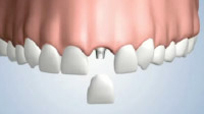
The allograft is a tissue graft between individuals of the same species but of non-identical genetic composition. The source is usually cadaver bone, processed into a bone graft material such as demineralized bone matrix, and available in large quantities. In the United States, all donors are screened for infectious disease before their bone is accepted into tissue banks, and the subsequent processing further eliminates virtually any chance of cross-infection.


To rebuild bone with an allograft, I first access the deficient area beneath the gums. A small block of substitute bone is shaped to restore the ridge to its original form, secured in place, and covered with additional bone material to help create a natural contour. A specialized membrane is placed over the site to support healing, and once the new bone has matured, any titanium fixation screws are removed.


This type of grafting can restore severe cases of bone loss, making it possible to place implants and enjoy the benefits of a secure, permanent replacement tooth.

Xenograft
A xenograft is a tissue graft between two different species, most commonly bone of bovine origin. Tissue banks often favor this material because it’s possible to source larger quantities of bone with a favorable microstructure, a factor that matters for how well new bone actually forms around the graft, compared to what’s available from human donors.
Because it isn’t your own living tissue, a xenograft integrates more gradually than an autograft, acting as a scaffold that your own natural bone slowly grows into and replaces over time. In practice, I often use xenograft material in combination with an autograft or as a standalone option for smaller grafting needs, particularly in cases where preserving the shape and volume of the ridge matters more than achieving the fastest possible integration.
Alloplast
An alloplast, sometimes described as an artificial bone substitute, is any synthetically derived graft material, not sourced from animal or human tissue at all. In implant dentistry, this typically means hydroxyapatite or a related synthetic formulation. Because there’s no biological donor source involved, supply is consistent and there’s no risk of disease transmission of any kind.
Alloplast materials tend to resorb and integrate at a different pace than biological grafts, and how well a specific product performs depends heavily on its formulation. Some manufacturer claims about a particular alloplast material are worth taking with a grain of salt until independent research backs them up. I select a specific graft material based on your individual bone volume, the location of the defect, and the latest published research, not on marketing claims from any one manufacturer.
Is a Dental Bone Graft Painful?
Most patients are surprised by how manageable this procedure is. I perform bone grafting under local anesthesia, and sedation options are available if you’d prefer to be more relaxed during the appointment. Any discomfort afterward is typically similar to what you’d feel after a tooth extraction: some soreness and mild swelling for a few days, well controlled with over-the-counter pain medication. Patients harvesting bone from a second surgical site, such as the hip or shin, may notice more soreness at that site than at the graft site itself.
Recovery and Outlook: Healing Timeline
Understanding the healing process helps set realistic expectations for your oral health and treatment timeline. Healing time depends on how much of the alveolar bone, the bone that surrounds and supports your teeth, needs to be rebuilt. A smaller graft, like the kind used for socket preservation at the time of an extraction, is typically ready for an implant in three to four months. A larger graft addressing significant ridge loss can take four to six months, and some patients with more extensive bone loss need a second grafting procedure to reach the volume required before we place implants.
In the first few days, expect some swelling and tenderness, which I’ll give you specific guidance on managing your procedure. Most patients return to normal activity within a few days, though I’ll ask you to avoid disturbing the surgical site and to stick to softer foods while the area settles. Over the following months, your body’s own natural bone gradually grows into and replaces the graft material. I’ll see you for a follow-up to confirm healing is on track before we move forward with implant placement.
Risks and Complications
Bone grafting has a strong track record, but like any surgical procedure it carries some risk. The most common issues are infection at the graft site, incomplete integration or partial graft resorption, and membrane exposure during healing. I minimize these risks through careful case selection, sterile technique, and by matching the graft material to your specific anatomy and health history. If a complication does arise, most are identified early at a follow-up visit and are treatable without derailing your overall treatment plan.
What Affects the Cost of a Bone Graft
Bone graft costs vary quite a bit from patient to patient, since no two cases need the same amount of work. A few factors that typically drive the price:
- Extent and technique, more than material. What drives the cost is how much bone has to be rebuilt and how it is done, rather than which graft material is used. The exception is an autograft harvested from a second site, where the additional surgery, not the bone itself, is what adds to the total.
- How much bone needs rebuilding. A small socket preservation graft is a much smaller procedure than a full ridge augmentation addressing significant bone loss, and the cost reflects that difference.
- Number of sites. Grafting one area costs less than grafting multiple sites in the same visit.
- Whether it’s combined with other treatment. Bone grafting performed at the same time as an extraction or alongside implant placement is often more efficient, and sometimes more cost-effective, than as a separate procedure.
Because these variables differ so much case to case, I don’t publish a general price range. I’ll give you an exact cost as part of your treatment plan after your consultation, along with a breakdown of your insurance coverage and financing options.
Not Sure If You Need a Full Bone Graft, or Something Smaller?
If you’re about to have a tooth extracted and want to prevent bone loss before it starts, rather than rebuild bone that’s already been lost, that’s a different and much smaller procedure called ridge, or socket preservation. You can read more about how socket preservation works and when it’s the right call. The grafting techniques on this page are for rebuilding bone that’s already been lost, which is a more involved procedure than preserving bone at the time of extraction.
How I Choose the Right Graft for You
Once the bone has matured around the graft, whichever type is used, implants can be placed and become securely embedded as new bone grows around them over the following months. Abutment posts are then attached, and carefully crafted replacement teeth are permanently secured on top, giving you a result that looks and feels like your natural teeth.
Which graft material makes the most sense for your case depends on how much bone needs to be rebuilt, where the defect is located, and your own preferences around a second surgical site. I’ll walk you through the tradeoffs for your specific situation during your consultation, along with what your insurance and financing options look like.
Frequently Asked Questions
How painful is a dental bone graft procedure? Most patients describe it as comparable to a tooth extraction: some soreness and swelling for a few days, managed with over-the-counter pain medication. The procedure itself is done under local anesthesia, with sedation available.
How long does a dental bone graft last? Once the graft has fully integrated with your existing bone, typically within three to six months, it becomes a permanent part of your jaw. It doesn’t wear out or need to be replaced the way a restoration might. From that point on, it’s simply your bone, supporting your implant the same way natural bone would.
Is a dental bone graft worth the investment? For most patients who need one, yes. Without adequate bone volume, a fixed implant usually isn’t possible at all, and the alternative is typically a removable option like a partial or full denture. A bone graft is what makes a permanent, fixed solution achievable. I’ll walk you through the specific value for your case, including cost and financing, at your consultation.
How long does a dental bone graft take to heal? It depends on the size of the graft. Socket preservation grafts are typically ready in three to four months. Larger grafts addressing significant bone loss can take four to six months.
Who performs a dental bone graft? Bone grafting for implants is typically performed by a periodontist, though some general dentists and oral surgeons also provide it. As a periodontics practice focused on oral health, this is a procedure we perform routinely alongside implant placement.
How long after a bone graft can I eat normally? I’ll ask you to stick to softer foods for the first several days while the site settles, then you can gradually return to your normal diet as healing progresses. I’ll give you specific guidance based on the size and location of your graft.
Schedule Your Bone Grafting Consultation
If you’ve been told you need a bone graft, schedule a personal consultation with one of our experienced NYC dental implant providers. We’ll perform a thorough evaluation of your teeth, gums, and jawbone and recommend the grafting technique that fits your case. Because our doctors are also leading New York and New Jersey periodontists, we can also handle any gum treatment you may need before implant placement.
Call our office at (347) 493-2439 or schedule your consultation online.