
Mini dental implants are narrow implants, usually less than 3 millimeters wide, that can be placed where a standard implant won’t fit without bone grafting. We do place mini implants. But I want to be straightforward about how we use them: a mini implant is one tool in our toolbox, not a cheaper version of a regular implant that suits everyone.
If you have plenty of bone, I’d choose a standard implant for you, because it’s stronger and built to carry a full chewing load for decades. If your bone is very thin, or the space for a tooth is very small, a mini implant can be exactly the right choice. Most of the problems people hear about with mini implants come from using them in the wrong situations.
What Are Mini Dental Implants?
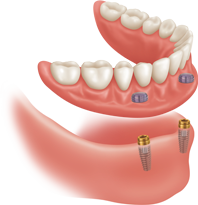
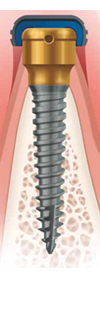
Like traditional dental implants, mini implants are titanium alloy posts placed into the jawbone to act as artificial tooth roots for missing teeth. In effect they are smaller versions of traditional dental implants, and the difference is the diameter. A standard implant is typically 3.5 to 6 millimeters in diameter. A mini dental implant is usually around 1.8 to 2.9 millimeters wide, roughly the width of a toothpick to a pencil lead.

Mini implants were first used to hold bridges and dentures in place temporarily while standard implants healed. Over time they were adopted for longer-term use, most commonly to stabilize lower dentures. They come in two main designs:
- One-piece mini implants, where the implant and the attachment are a single unit. These are often connected to a denture the same day, before the bone has had time to fuse to them.
- Two-piece narrow implants, where the attachment is added separately. This lets the bone integrate with the implant before it carries load, and the attachment can be changed or upgraded later without replacing the implant.
Mini Implants Vs. Regular Implants
| Mini Dental Implants | Regular (Standard) Implants | |
|---|---|---|
| Diameter | About 1.8 to 2.9 mm | About 3.5 to 6 mm |
| Bone needed | Can fit narrow or thin bone | Needs more bone width, sometimes a graft |
| Surgery | Smaller procedure, often through tiny openings | Standard implant surgery |
| Strength | Less surface area, lower load capacity | Built for full chewing forces |
| Best uses | Very narrow spaces, thin bone, lower denture support | Most single teeth, bridges, full-arch restorations |
| Long-term durability | Good when used in the right case; more likely to loosen under heavy load | The longest track record of any tooth replacement |
In short, a mini implant trades strength for size. That trade is worth making in some mouths and a mistake in others.
Benefits Of Mini Dental Implants
Used in the right case, mini implants offer real advantages compared to traditional implants:
- They need less bone. Their smaller size lets them fit where bone width or bone density is too low for a standard implant, which can avoid a bone graft.
- A smaller, less invasive procedure. Placement is usually quicker, through a tiny opening in the gum, with less discomfort afterward.
- Faster treatment. They can often be placed in a single visit.
- They fit small spaces. Mini implants require less space between neighboring teeth.
- Lower cost per implant. They usually cost less than traditional implants, especially when a graft is avoided.
Those benefits are real, but mini implants aren’t suitable for everyone. Their smaller size is also their main limitation.
Who Is A Good Candidate For Mini Dental Implants?
- A very small space between two teeth. When a tooth is missing and the gap is too narrow for a standard implant, such as some front teeth, a single mini implant in the middle of the space can be the perfect solution.
- Thin bone. When the jawbone is too narrow for a traditional implant, or bone density is low, and bone grafting isn’t wanted or isn’t practical, a mini implant can sometimes avoid the graft entirely, because mini implants require less bone.
- Stabilizing a lower denture. Loose dentures are one of the most common reasons patients ask about mini implants, and the lower jaw (the mandible), with its denser bone, is where they tend to do best.
- Patients who can’t have more extensive surgery. Because placement is less invasive and quicker than traditional implant treatment, minis can be an option for some patients whose health makes a larger procedure difficult.

When We Don’t Recommend Mini Implants
We don’t place a mini implant just because a patient asks for one. It’s like using skinny nails to hang something heavy: if the area is going to carry a strong load, a thin implant isn’t going to last. We generally recommend standard implants instead when:
- You have enough bone for a standard implant. In that case it’s the stronger, longer-lasting choice.
- The implant will replace a back tooth, such as a molar, where chewing forces are highest.
- The plan is a fixed full-arch bridge. Full-arch restorations like All-on-4™ need the strength of standard implants.
- The goal is to stabilize an upper denture. The upper jaw usually has softer bone, which makes mini implants there less predictable.
- You clench or grind your teeth heavily.
If bone is the problem, a mini implant isn’t the only answer. Bone grafting, graftless options such as zygomatic implants, or standard implants placed at an angle can often solve it.
Why Mini Implants Get A Bad Reputation
Mini implants have been overused in the wrong situations, and that has given them a bad rap. A common mistake is placing several minis at different angles to replace a single tooth. Too many screws crowded into one area are hard to keep clean, bacteria collect around them, and the whole restoration can fail. In most of those cases, one implant placed in the right spot would have done the job. When a mini implant is chosen for the right reason and placed correctly, it can work very well. Our page on why dental implants fail covers the other common causes of failure.
Mini Implants For Dentures
The most common use of mini dental implants is to stop a lower denture from moving. Several implants are placed in the front of the lower jaw, with the number depending on the implant design and your bone, and the denture is fitted with small attachments that snap onto them. The result is a denture that stays put when you eat and speak, without adhesive.
The design matters. With some one-piece minis, the attachment housings are bulky and can weaken the denture, and the rubber O-rings wear out and need regular replacement. A two-piece design with low-profile attachments lets the bone fuse to the implant before it carries load, keeps the denture thicker and stronger, and allows the attachments to be replaced or upgraded as they wear. If you’re comparing options for a loose denture, our page on snap-in dentures and overdentures explains how standard implants can be used the same way, and when that’s the better choice.
The Mini Dental Implant Procedure
- Consultation and imaging. We examine your mouth and take a CBCT 3D scan to measure your bone in three dimensions. That scan is what tells us whether a mini implant, a standard implant or another option is right for you.
- Placement. Mini implants are placed under local anesthesia, with sedation available. Because they are so narrow, they can often be placed through a tiny opening in the gum without cutting a flap, which usually means less discomfort and faster healing.
- Connecting the tooth or denture. Depending on the implant design and the quality of your bone, your crown or denture is connected either the same day or after a healing period that lets the bone integrate with the implant. Once it’s in place, it should look and function like your natural teeth.
How Long Do Mini Dental Implants Last?
Mini implants can last many years when they’re used in the right situations: thin bone, small spaces and lower dentures, in a patient who keeps them clean. They are more likely than standard implants to loosen when they carry heavy loads, when they support an upper denture, or when too many are crowded into one area. Like any implant, they require regular checkups and good home care for your oral health, which lets us catch a loosening implant or a worn attachment early.
Mini Dental Implants Cost
Mini dental implants usually cost less per implant than standard implants, and because they can often avoid a bone graft, the total treatment can cost less too. But the cheapest option isn’t always the least expensive one over time. A mini implant placed where a standard implant belongs may need to be replaced. Your cost depends on how many implants you need, whether they support a tooth or a denture, and whether your existing denture can be adapted. We’ll give you a clear plan and review your insurance coverage at your consultation.
Find Out If Mini Implants Are Right For You
If your dentist has suggested mini implants, or you’re wondering whether they could steady a loose denture, the best next step is an evaluation of your bone. We place mini implants and standard implants, so we can recommend whichever is genuinely right for your mouth. Call us at (347) 493-2439 or Book A Consultation at our offices in Manhattan, Long Island, Westchester or Nutley, New Jersey. For more detail on the process, see our mini dental implants FAQ.
Frequently Asked Questions
Are Mini Dental Implants Good?
Yes, in the right situation. They work well in thin bone, very narrow spaces and for stabilizing lower dentures. They are not a good substitute for a standard implant when you have enough bone, or for heavy-load areas like molars.
Can A Mini Implant Replace A Single Tooth?
Sometimes. A single mini implant can be a good choice for a small tooth in a narrow space. For larger teeth, especially back teeth, a standard implant is usually the better option.
How Many Mini Implants Do I Need For A Denture?
It depends on the implant design and your bone. A lower denture typically needs several mini implants, and we’ll tell you exactly how many after reviewing your 3D scan. Upper dentures generally need more support, and standard implants are often the better choice there.
Do Mini Dental Implants Hurt?
Placement is done under local anesthesia, so you shouldn’t feel pain during it. Because the openings are so small, most patients have only mild soreness for a few days.
Can I Get Mini Implants In One Day?
Mini implants can often be placed in a single visit, and with some designs the denture can be connected the same day. Other designs work better with a healing period first, so the bone can integrate with the implant before it carries load.
Can Mini Implants Support A Bridge?
Mini implants can support a small dental bridge in some cases, but for multiple missing teeth we usually recommend standard implants, which handle the load better and last longer.
Are Mini Implants Better Than Regular Implants?
Neither is better in every case. Regular implants are stronger and have the longer track record, so we use them whenever the bone allows. Mini implants are the better choice when a standard implant won’t fit and you’d prefer to avoid grafting.